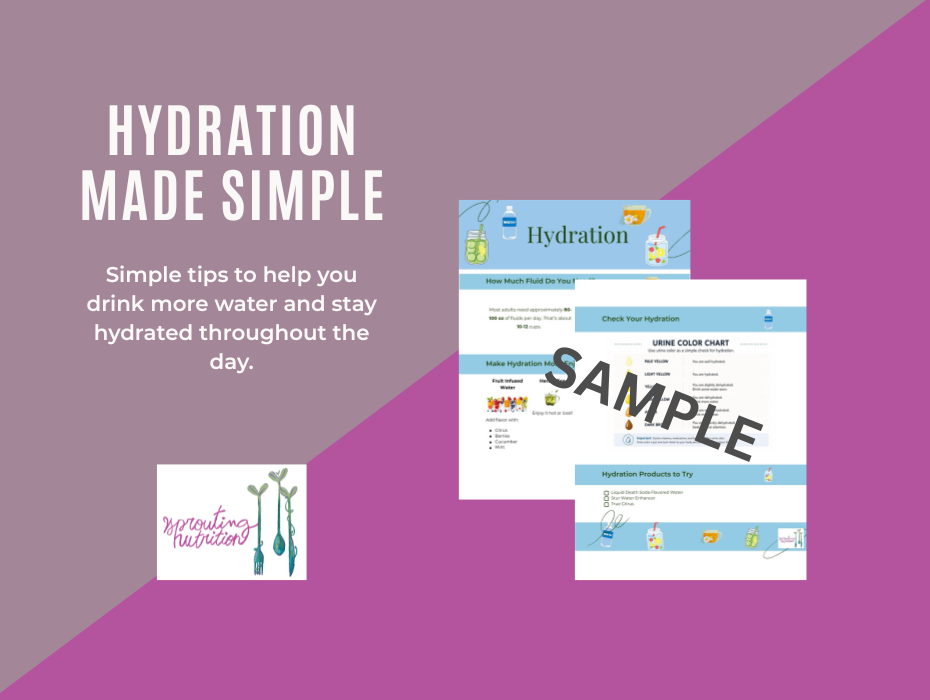
Not sure how much fluid you actually need each day? Hydration Made Simple is a practical, easy-to-use guide designed to take the guesswork out of hydration and help clients build simple habits that support adequate fluid intake.
This 2-page resource provides straightforward guidance on daily fluid needs, when hydration needs may increase, signs of inadequate hydration, and simple ways to make drinking water more enjoyable. A urine color chart and product recommendations provide additional tools clients can use to monitor and improve their hydration habits.
Guidance on average daily fluid needs
Situations when fluid needs may be higher, such as increased activity, hot temperatures, illness, or pregnancy
Signs that may indicate inadequate hydration
Urine color chart for a simple visual reference
Practical ways to make water more enjoyable
Product ideas to help increase fluid intake
Clean, printable visuals that are easy to reference at home
Adults looking to improve their hydration habits
Individuals who aren't sure how much fluid they need
Registered dietitians providing outpatient nutrition counseling
Clinicians teaching foundational nutrition concepts
Professionals leading nutrition education or group workshops
Clients can use this guide as a daily reference to help plan their fluid intake and recognize situations when they may need more. Nutrition professionals can use the same resource during one-on-one counseling, follow-up appointments, or group education.
Hydration Made Simple turns hydration into an easy-to-understand nutrition topic with practical tools clients can use in everyday life.
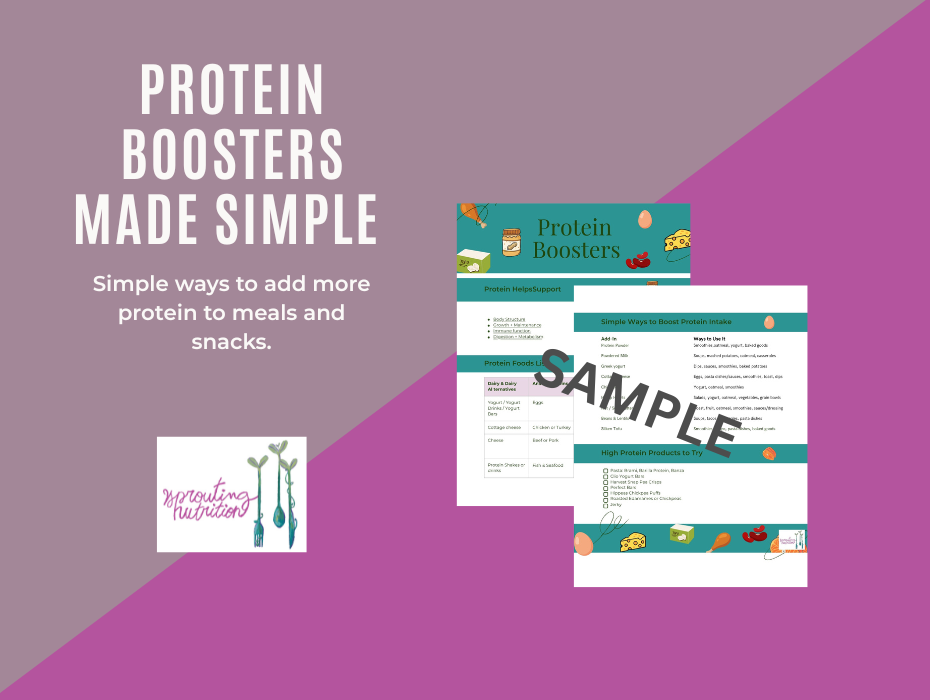
Struggling to figure out which foods contain protein or how to add more protein to everyday meals and snacks? Protein Boosters Made Simple is a practical, easy-to-use guide designed to make building protein-rich meals and snacks feel simple and approachable.
This 2-page resource explains why protein is important, highlights foods that provide protein, and offers realistic ways to increase protein intake throughout the day. With simple visuals and real-life examples, clients can quickly find ideas they can put into practice at home.
A simple overview of why protein is important and its role in the body
A list of protein-rich foods
Easy ways to boost protein at meals and snacks
Practical protein-rich products to consider
Real-life examples for everyday application
A clean, printable format that is easy to reference at home
Adults looking to build more protein-rich, balanced meals and snacks
Individuals looking for greater fullness and satisfaction from meals
Individuals focused on muscle-building and overall nutrition
Athletes looking for practical protein and recovery strategies
Registered dietitians providing outpatient nutrition counseling
Clinicians teaching foundational nutrition concepts or leading group education
Clients can use this guide for inspiration when building meals and snacks, while dietitians and other nutrition professionals can use it as a quick teaching tool during one-on-one counseling or group classes.
Protein Boosters Made Simple uses a whole-food approach to help make protein feel less complicated, giving clients practical ideas they can easily incorporate into their everyday eating.
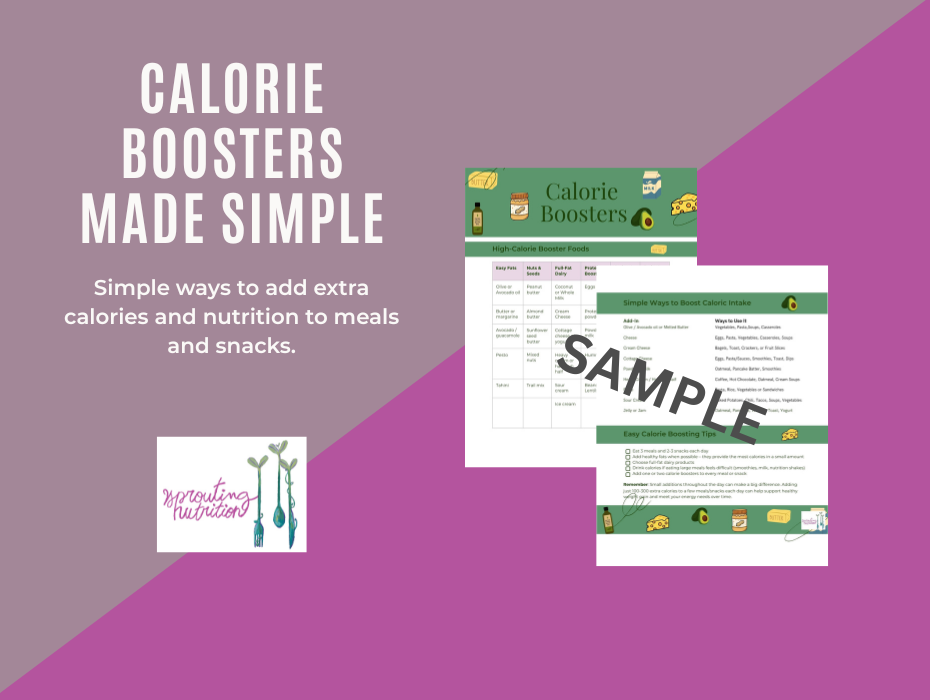
Need simple ways to add more calories to meals and snacks? Calorie Boosters Made Simple provides practical, whole-food strategies to help adults and children incorporate more calorie-dense foods into their everyday eating without relying on supplements.
This easy-to-use 2-page guide takes the guesswork out of increasing calorie intake with a list of high-calorie foods, simple ways to add them to meals and snacks, and practical tips that can be used right away.
A list of calorie-dense foods
Simple ways to add calorie boosters to meals and snacks
Easy, practical calorie-boosting tips
Real-life examples for everyday use
A clean, printable layout for easy reference at home or during counseling
Adults and children working toward weight gain
Individuals looking for whole-food ways to increase calorie intake
Registered dietitians providing outpatient nutrition counseling
Nutrition professionals leading group education or workshops
Clients can use the guide to identify simple add-ins that fit their usual meals and snacks, while dietitians and other nutrition professionals can use it as a quick teaching tool during individual counseling sessions or group education.
Calorie Boosters Made Simple makes increasing calorie intake feel approachable by focusing on small, practical additions that can easily become part of everyday meals and snacks.
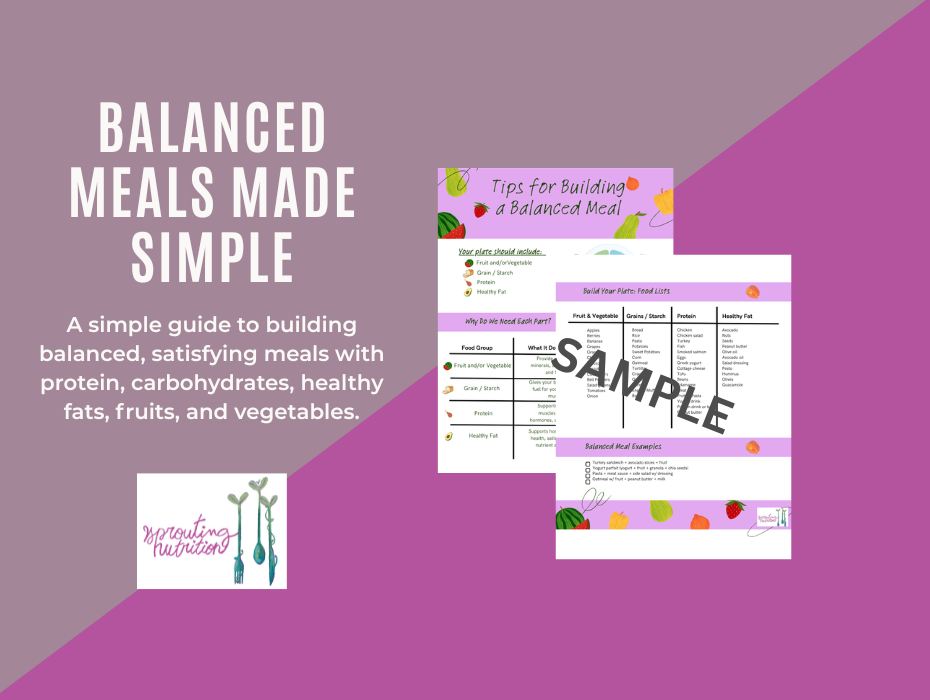
Building a balanced meal can feel overwhelming when you don’t know where to start. Balanced Meals Made Simple provides an easy-to-follow framework for building balanced, satisfying meals without overcomplicating meal planning.
This 2-page handout helps adults and families understand how to put the pieces of a balanced meal together, with real-life meal examples to make the concept practical and easy to apply at home.
A simple framework for building balanced meals
Real-life sample meals showing how to put the framework into practice
Easy-to-understand nutrition guidance
A clean, printable layout that can be used at home or during nutrition counseling
Adults looking to build more balanced meals
Parents learning how to plan balanced meals for the family
Registered dietitians providing outpatient nutrition counseling
Nutrition professionals leading group education or workshops
Clients can use the handout as a visual reference when planning meals at home, while dietitians and other nutrition professionals can use it as a teaching tool during one-on-one appointments, food recall discussions, group classes, and workshops.
With simple explanations and practical examples, Balanced Meals Made Simple makes meal planning feel more approachable and gives clients a framework they can continue using in everyday life.
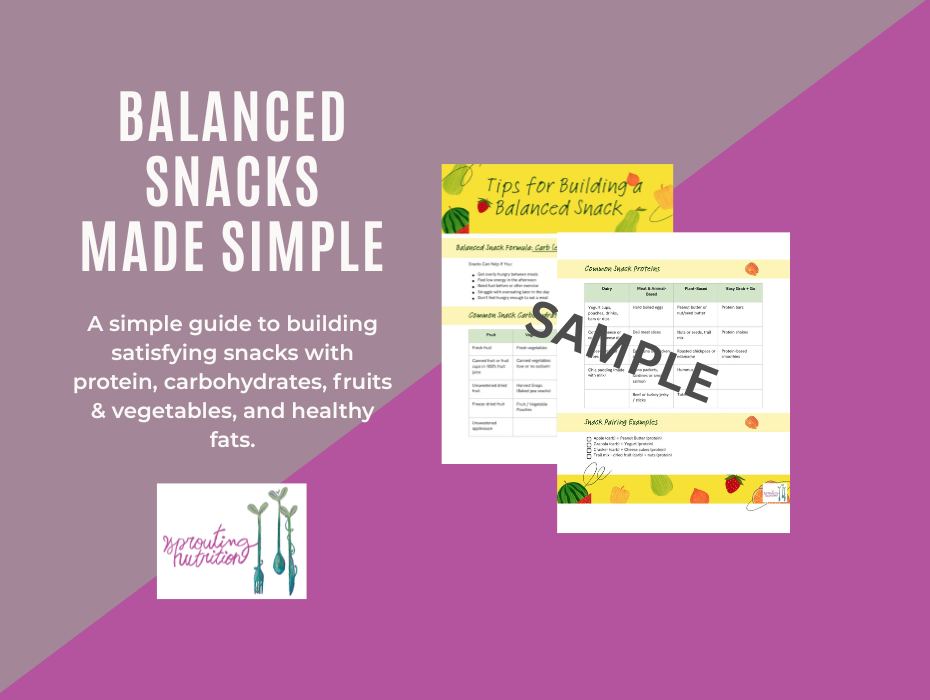
Not sure what makes a snack balanced and satisfying? This simple, dietitian-created guide explains how pairing protein with a carbohydrate can help you build a more balanced snack.
Learn why both components are important, how they work together to support energy and fullness, and how to easily combine them in your everyday snacks.
What’s included:
A simple protein + carbohydrate snack formula
An explanation of why both components are important
Examples of protein foods, such as Greek yogurt, cheese, nuts, nut butter, eggs, and hummus
Examples of carbohydrate foods, such as fruit, whole-grain crackers, granola, pretzels, and toast
Easy, balanced snack combinations you can try
Practical ideas for quick and convenient snacking
Created by a Registered Dietitian to make balanced snacking simple, realistic, and easy to put into practice.
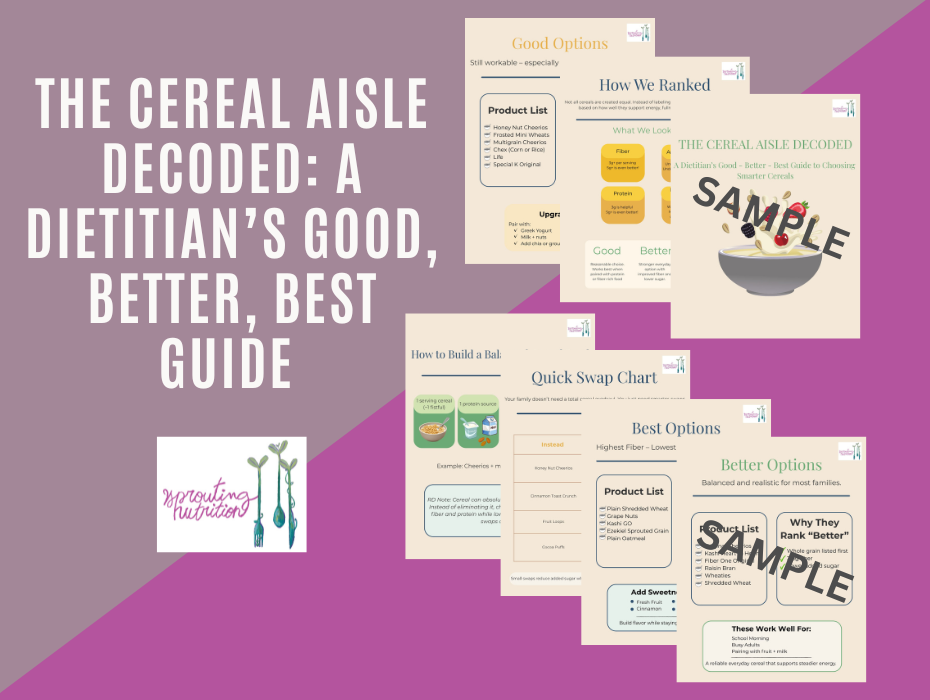
Not sure which cereal to choose at the grocery store? This simple, dietitian-created guide takes the guesswork out of choosing cereal by breaking down popular options into Good, Better, and Best categories.
I’ve reviewed cereals based on key nutrition factors and explained what makes certain options a better choice than others. You’ll also get examples of best-choice cereals to look for on your next grocery trip.
What’s included:
A simple Good, Better, Best cereal ranking system
Guidance on what to look for when choosing a cereal
Examples of cereals that fall into each category
My best cereal choices and why they stand out
Practical tips to make choosing cereal easier—without needing to analyze every nutrition label
Created by a Registered Dietitian to help you make confident, realistic choices at the grocery store.
Brand and product names are included for educational purposes only and do not imply endorsement, sponsorship, or affiliation. Product formulations and nutrition information may change over time.
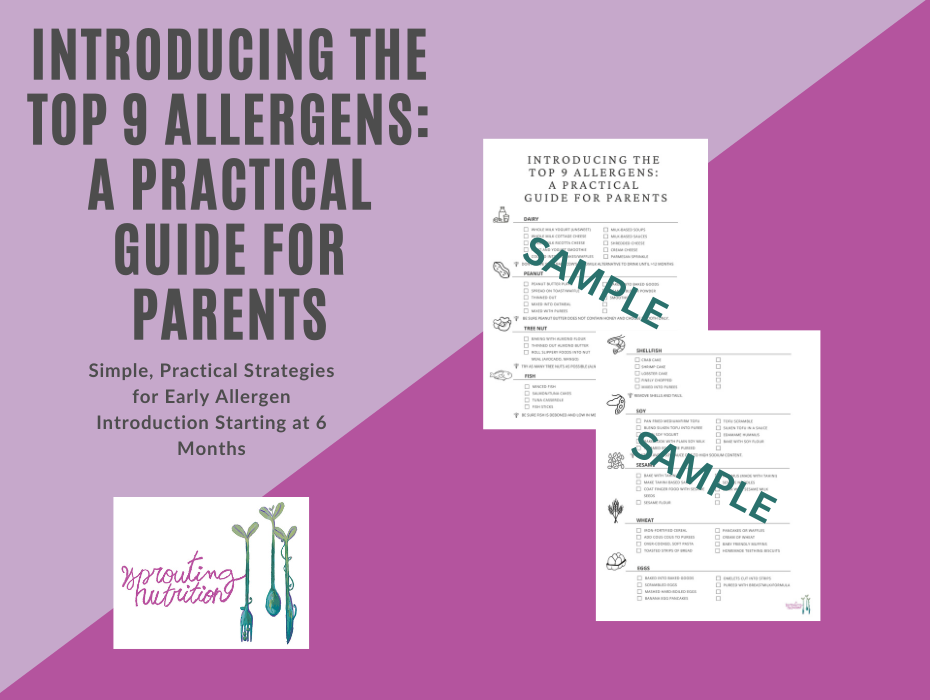
Introducing the top 9 allergens doesn’t have to feel overwhelming! This easy-to-use guide breaks down each of the top 9 food allergens and provides simple, age-appropriate ways to introduce them into your baby’s diet.
For each allergen, you’ll find examples of foods and easy ways to incorporate them—such as yogurt and cheese for dairy, or smooth nut butters for peanuts and tree nuts. Use this guide as a convenient reference as you work through introducing common allergens during the early stages of starting solids.
What’s included:
A breakdown of the top 9 major food allergens
Simple food examples for each allergen
Easy ways to incorporate each allergen into baby’s meals and snacks
A convenient format to help you keep track of allergen introductions
Created by a Registered Dietitian to help make starting solids and allergen introduction feel a little simpler and more manageable.
Note: This resource is for educational purposes and is not a substitute for individualized medical advice. If your baby has a history of severe eczema, food allergy, or another condition that may increase allergy risk, talk with your pediatrician before introducing allergens.
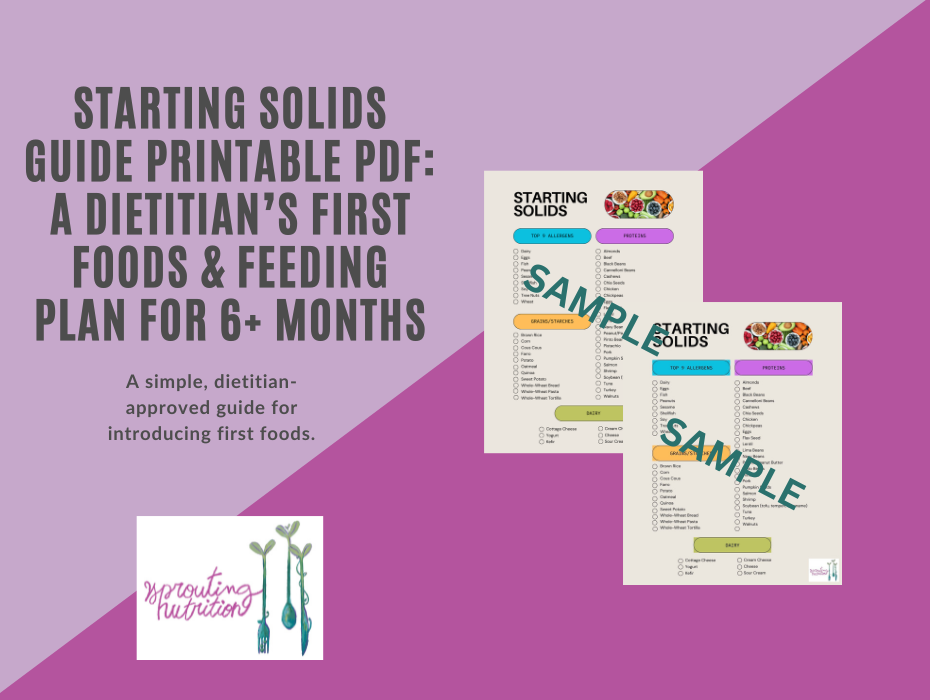
Starting solids can feel overwhelming when you're trying to figure out what foods to offer first and how to provide variety. This simple, easy-to-use Starting Solids Checklist provides parents with a helpful framework for introducing a variety of foods to their infant.
Designed with both families and nutrition professionals in mind, this 2-page printable PDF provides introductory food ideas organized by food group, along with a checklist parents can use to keep track of foods their baby has tried.
Use it to:
Explore a variety of introductory foods for your baby
Keep track of foods your baby has tried
Encourage variety across different food groups
Make starting solids feel more organized and manageable
Provide a simple visual reference to keep on hand at home
For dietitians and other clinicians, this resource can be used during nutrition counseling as a quick, visual guide for discussing foundational foods and food variety with parents. The checklist can also be incorporated into follow-up visits to help families track their progress.
2-page printable PDF
Introductory food ideas for infants
Starting solids checklist
With a clean, easy-to-read layout, this resource is designed to be simple to print, reference, and use throughout the starting-solids journey.
No results match your search. Try removing a few filters.
